
Your Bookstore Does Not Have a Space Problem. It Has a Traffic Problem.
For decades the campus store had one thing every other retailer on earth wanted. A captive reason to visit. Every student had to come in, twice a year, whether they felt like it or not. Textbooks did the marketing.
That reason is gone. Course materials moved online, and NACS Student Watch data shows student spending on course materials falling as digital preference climbs. Inclusive access programs pulled book sales into the tuition bill. Rentals and third-party sellers took the rest. The store is still there, the square footage is still there, and the mandatory trip is not. Some campuses are already looking at what else that space could do.
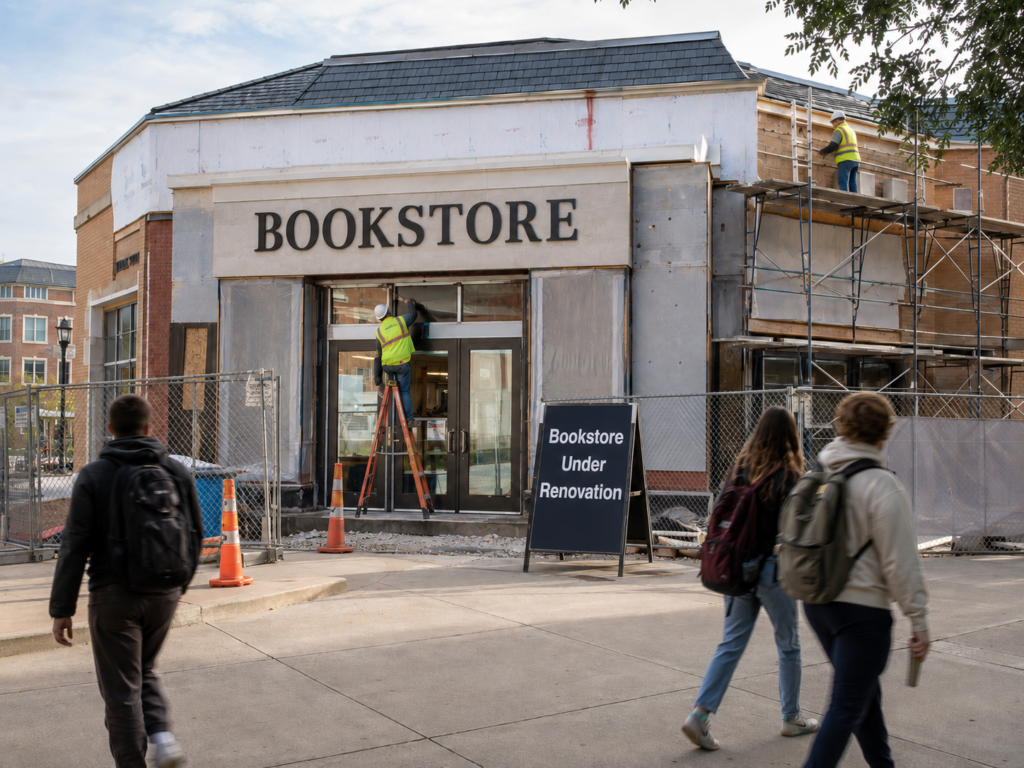
Everything else follows from that. Apparel does not sell to students who do not walk in. The new coffee counter does not perform in an empty store. The sign about your textbook grant program does not get read. Whether your store is run in-house or managed by a partner like Barnes & Noble College or Follett, the scoreboard comes back to the same number. How many students came through the door, and how often.
So most of the work becomes traffic work. Sidewalk sales, game-day promos, free coffee during finals, giveaways, tabling at orientation. All of it is real effort spent buying visits one at a time.
The question worth asking is whether there is a reason to come in that repeats on its own.
Give students a reason to come back, and make it something you sell
Here is the storyline. Let students borrow the expensive gear you already stock.
A student can come into the store, check out an iPad for the weekend, and bring it back on Monday. Borrow an external monitor for thesis crunch. Grab a MacBook charger for the two days theirs is missing. Take a Bluetooth speaker for a floor event. Pick up a graphing calculator the week of the exam.
That is try before you buy, and it is the strongest traffic engine a campus store can run, for one reason. The thing that brings the student in is the thing you are trying to sell them.
Compare that to a free coffee promotion. Coffee gets a student in the door once and connects to nothing on your shelves. A tablet trial gets them in twice, puts your product in their hands for three days, and ends with a student who now knows whether they want it.
You stop renting attention and start lending inventory.
Two visits per rental, every time
This is the math worth writing on a whiteboard.
One rental equals a minimum of two trips into the store. Pickup and return. There is no version where a student borrows something and only comes in once.
Both trips walk them past the apparel wall, the new merch drop, the snack cooler, and whatever you are promoting that month. A student who came in to try a monitor leaves with a mug. Another one finally notices you sell lab coats. Another one sees the sign about emergency textbook funding that has been up for six weeks.
None of that was the reason for the visit. All of it is why the visit was worth having.
Run twenty rentals a week and you have added forty student visits you were not getting before, from students who are self-selecting as interested in your highest-margin category.
Why students hesitate on tech in the first place
Ask a sophomore why they have not bought a tablet for note-taking. You will hear the same three things. 1. They are not sure they would actually use it. 2. They do not know if it works with their setup. 3. They cannot justify the money on a maybe.
That is a confidence problem, and a “sign on an endcap” does not fix it. A weekend with the device does.
Then the follow-up writes itself. A student returns the tablet, and the store sends a short note with the student price and a trade-in offer. Some buy. The ones who do not still came in twice, and they will come back the next time they need something.
What this looks like with RecRe
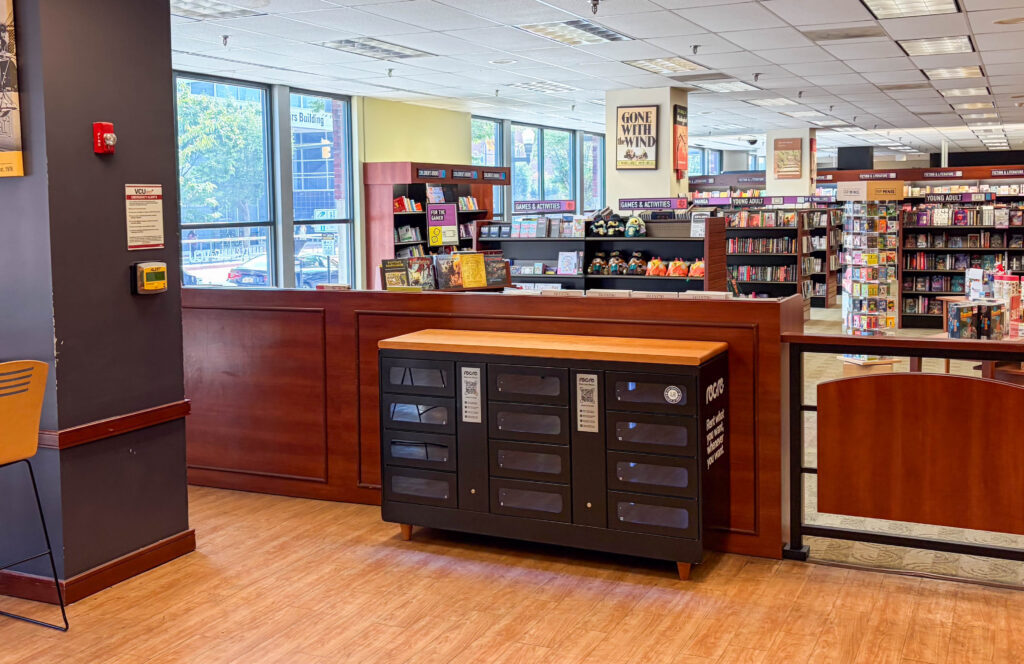
RecRe is a self-serve lending box that sits inside your store. Students scan a QR code with their phone, verify with their campus email or single sign-on, and check out an item in a few seconds. No app to download. No staff member has to run it or stand there watching it. Managers see every checkout, every return, every late item, and every usage pattern in a dashboard. Here is how it works.
Stock it with the gear students hesitate on.
- Tablets and laptops for a weekend trial
- External monitors for finals and thesis season
- Bluetooth speakers, headphones, and mics
- MacBook and USB-C chargers
- Graphing calculators
- Power banks, webcams, presentation clickers
Items can run from the size of a MacBook charger up to a folding wagon, so most of what your tech wall sells will fit. Campuses are already doing this with high-value gear. UNC Charlotte uses RecRe to lend out media equipment, and departments across campus run the same play with different inventory.
You choose how the borrowing works. Free checkout with accountability built in, where late returns create strikes against a verified student account. A free window that converts to an hourly or daily rate if the item stays out too long. Or a straight paid rental if you want the equipment to earn on its own. Different items can follow different rules.
You also get data most campus retail programs never see. What students want to try, when they show up, who comes back, and which trials turn into sales. That is useful for buying decisions, and it is useful in the annual conversation with the institution about what the store contributes. We wrote more about making campus usage data actually work for you and how to think about ROI on a box.
It connects the store to what the campus actually cares about
Campus stores have spent years trying to show they belong to the academic mission of the campus. A lending program says it plainly.
The store becomes the place a student can get the equipment they need for class without buying it first. That is an affordability story, an access story, and a student success story, and the store owns all three. It sits naturally alongside course material affordability work, basic needs programs, and tech equity efforts campuses are already funding.
A reasonable way to start
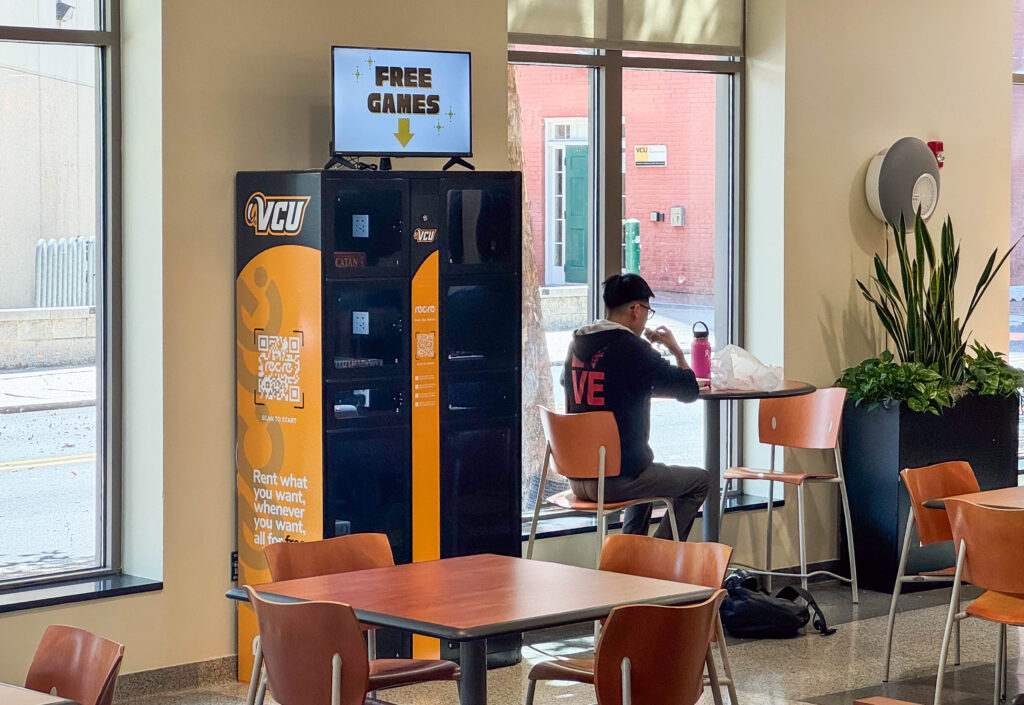
Pick eight to twelve items students hesitate on. Put one box near the front of the store. Run it for a semester and watch four numbers. Rentals per week, repeat borrowers, peak hours, and attach sales on pickup and return days.
Install and training take a couple of hours. Students can start borrowing the same day. You can see the campuses already running RecRe here.
Want to see how it would work in your store?
Book a 20-minute walkthrough and we will map it to your floor plan and your tech assortment.
